Visit the legendary landscapes of King Arthur's Wales
There are thought to be over 300 sites in Wales that claim some connection with King Arthur, including Arthur’s Stone on Penrhyn Gŵyr (the Gower Peninsula), Caerleon and the summit of Yr Wyddfa (Snowdon).
The real Arthur was probably a Romano-British chieftain who fought against the invading Anglo-Saxons in the 5th century. Arthur’s heroic deeds were recounted by medieval Welsh poets and story tellers, and the tales became richer and more embroidered with each telling. King Arthur and his entourage are linked with scores of sites all over Cymru, from standing stones and caves to lakes and islands.
Merlin and the dragons of Dinas Emrys
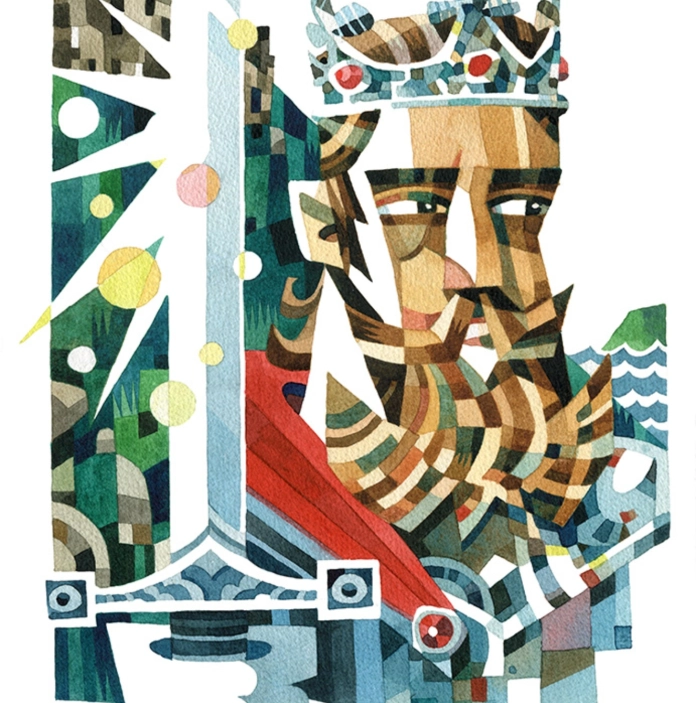
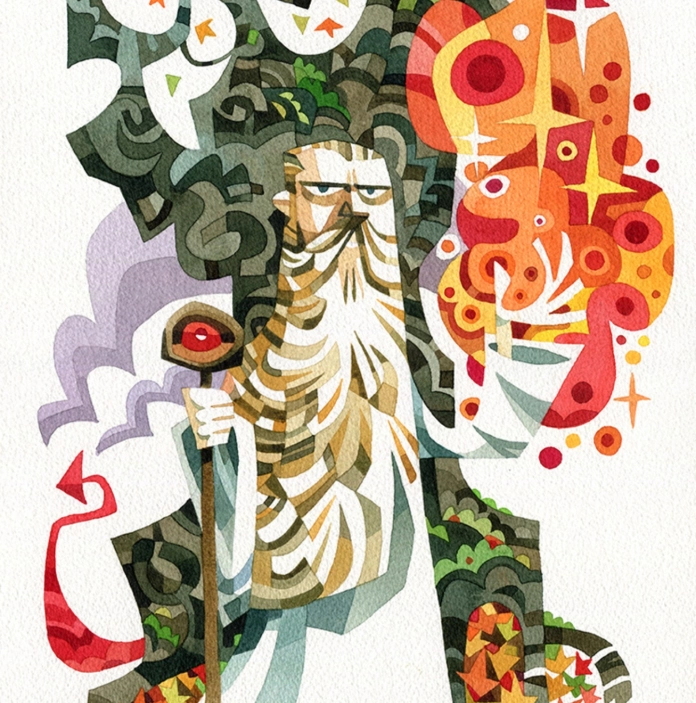
Merlin crops up widely in early Celtic literature as a mystical wild man of the woods, but it was the 12th century cleric Geoffrey of Monmouth who laid the foundations of Merlin’s popular image as King Arthur’s supernatural sidekick. It was the boy wizard Merlin who discovered why the castle walls of Dinas Emrys, near Beddgelert kept falling down: two dragons, one red and one white, were fighting in a pool beneath the castle (the red dragon won, of course – and became the symbol of the fight against the Saxon foe). Follow the legendary trail of Dinas Emrys up to the ruined castle's remains.
As the legend grew, Merlin became Arthur’s wise counsellor and court magician. In Cymru, he’s most strongly associated with Carmarthen: the town’s Welsh name is Caerfyrddin; Myrddin is the Welsh form of Merlin, hence ‘Merlin’s Fort’.
A drowned kingdom and mysterious bells
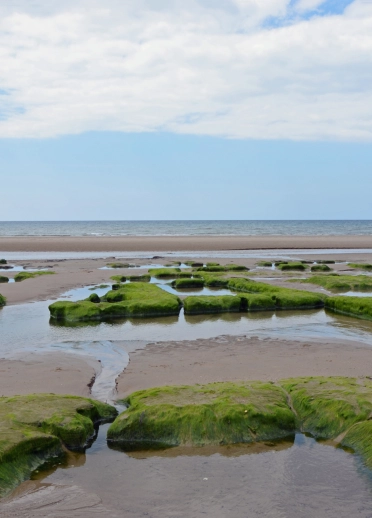
Up until the last Ice Age, the land within the curve of Cardigan Bay was fertile, full of forests, wildlife and villages. A favourite Welsh folk tale is about how the land ended up under water, although of course there are many versions of the legend of the Welsh Atlantis! Here's the basic version:
A long time ago, Gwyddno Garanhir ruled over his kingdom of Cantre'r Gwaelod (the Lowland Hundred). The land was protected from the wild seas by a huge wall, and a watchman was always on duty to close the sluice gates at high tide or flood danger. One night, the watchman was drunk and didn't close the gates in time - and the sea poured in. Bells rang out in warning and the people fled to higher ground, never to return.
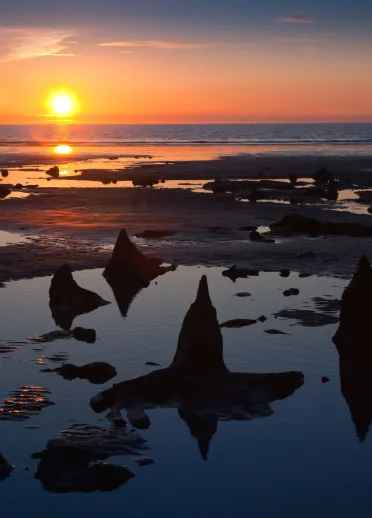
If you walk the sandy beaches at Borth, Ynyslas and Tywyn, you can sometimes see the remains of the submerged forest. And if you listen hard, you may hear the echoes of the bells ringing out in warning. Find out more about the tale and locations on the Royal Commission on the Ancient and Historical Monuments of Wales website.
People and castles linked to Welsh legends
You’ll still see Owain Glyndŵr’s flag, four lions rampant on gold-and-red, flying proudly on flagpoles around Cymru today, including outside the Owain Glyndŵr Centre in Machynlleth. This great national hero was born around 1359 into a noble Welsh family, and served the English crown as a soldier. Glyndŵr had retired to peaceful middle-age in the borderlands... until a neighbouring baron swindled him out of land. Glyndŵr’s fight for justice ignited a full-scale rebellion against Henry IV. By 1404 Glyndŵr controlled most of North and Mid Wales from his court in Castell Harlech. In 1404 he held his first parliament in Machynlleth, where he was crowned Prince of Wales - the last native Welshman to bear the title. The rebellion was suppressed in the early 1410s; Glyndŵr himself was never captured, but mysteriously vanished around 1415.


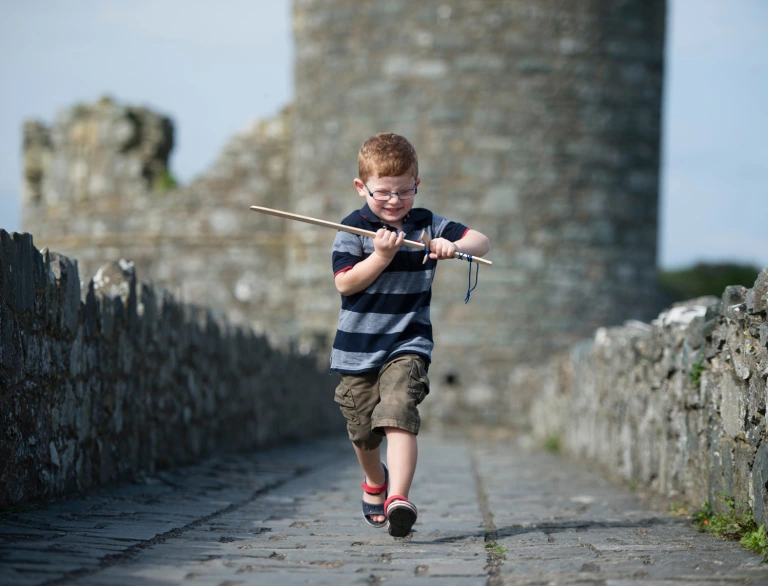
Harlech is a storytelling and imagination-fuelling hotspot. On a spur of rock above the Irish Sea, breathe in and think of Owain Glyndŵr, our last Welsh Prince of Wales. Castell Harlech was his brief home after a revolt against the English, but fell again in 1409. It remains one of the greatest castles in Europe. Explore Harlech's old streets and pathways on the family-friendly Meirion's Story Trail or the Branwen Walk - named after a legendary heroine from the Mabinogion who lived in Harlech.
The stories collected in the Mabinogion (or to give them their correct title, the Four Branches of the Mabinogi) are the earliest surviving works of British prose literature. They were passed on orally for centuries before finally being written down in Welsh in the 11th century. Branwen plays a starring role in the second Branch as the sister of Bendigeidfran, or ‘Brân the Blessed’, the giant king of Britain, who marries her off to the king of Ireland.
It doesn’t end well: after a series of gory incidents involving mutilated horses, severed heads and a magical cauldron, Branwen returns to Wales to die of a broken heart. According to tradition, she’s buried near the village of Llanddeusant on Ynys Môn, where there’s a Bronze Age burial mound called Bedd Branwen (Branwen’s grave).
Bendigeidfran was mortally wounded in Ireland when he went to rescue her, and instructed his men to cut off his head and bury it in London – facing France, so that Britain would never be invaded by sea.
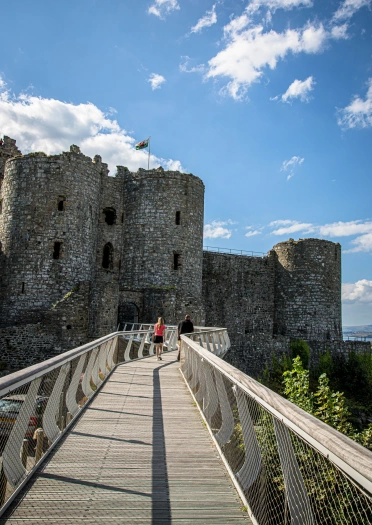
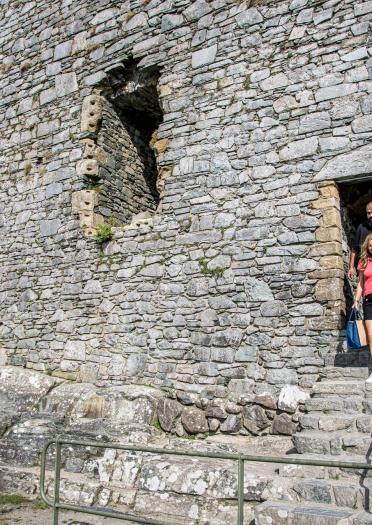
Castell Conwy is an incredible complex of eight towers in a medieval fortification reached by bridge. There are endless stories to discover within the walls of this magnificent landmark of myth and legend. Edward I moved monks on to build it, but Owain Glyndŵr cunningly seized it in an early 15th century Welsh uprising.

You might know the 12th and 13th century lands of North Wales from their immortalisation in the much-loved Princes of Gwynedd stories. Following in their footsteps is easy and evocative, but the ruined Castell Dolwyddelan (Dolwyddelan Castle), once the fortification of Llywelyn the Great, is a must-see on the crags of North Wales. Head to Beddgelert to discover the sad tale of Llywelyn's faithful hound, Gelert.
Read more: Exploring the castles of North Wales


Characters from Welsh folklore
A lady made from flowers
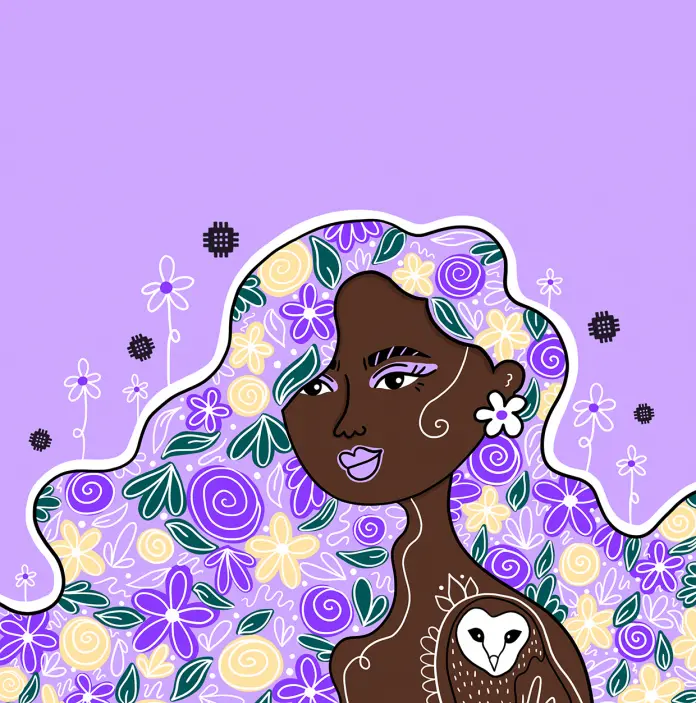
We meet our heroine Blodeuwedd in the fourth Branch of the Mabinogi. A man named Lleu has been cursed: he will never marry a human wife. Two enterprising magicians make a wife for Lleu out of flowers - Blodeuwedd (her name means ‘flower face’). The couple settle down at a castle near Trawsfynydd until Blodeuwedd has an ill-advised fling with the lord of Penllyn (modern-day Bala). In revenge, she’s hunted down to Llyn Morwynion ('the lake of the maidens’) near Blaenau Ffestiniog, and turned into an owl. You can walk up to the lake following the Snowdonia Slate Trail.
Wales' Lady of the Lake
Llyn y Fan Fach is a lovely glacial lake on the western flanks of the Bannau Brycheiniog (Brecon Beacons) National Park. Here lived the beautiful Lady of the Lake, who married a local farm lad with a pre-nuptial clause that if he struck her three times, she would go straight back to her lake and take all the farm animals with her. In common with our other Welsh heroines, the marriage ended in tears, but their sons went on to become the first of many generations of expert herbalists and healers, the Physicians of Myddfai.


Rhiannon - a Celtic horse goddess
Women in the Mabinogi often get a tough time, but Rhiannon emerges as one of the strongest and most likeable characters in the entire canon. She is married (mostly happily) to Pwyll, prince of Dyfed and, after his death, Manawydan, a warrior who in later poems is one of King Arthur’s knights. Rhiannon is probably based on a Celtic horse goddess - she first appears on a gleaming white horse - and has three magical birds whose song can ‘wake the dead and lull the living to sleep’. She was celebrated in the Fleetwood Mac song that bears her name, and remains a popular folk figure around Arberth (Narberth), where she made her home.

Legends and stories about Welsh saints
St David - Wales' Patron Saint
St David was born in 500 AD, founding monastic communities and churches in Wales, Brittany and southwest England. You can visit the ruins of St Non’s Chapel on the site where he was born, and Tyddewi (St Davids), where he was buried at the site of St Davids Cathedral. There's a lovely historic monument walk around St Non’s Chapel and St Davids if you want to contemplate 'doing the little things'. We celebrate St David's Day on 01 March.

St Dwynwen and tales of doomed love
St Dwynwen (Santes Dwynwen) was a fourth-century Welsh princess, and our present day Welsh patron saint of lovers. Unlucky in love, Dwynwen retreated to beautiful Ynys Llanddwyn (Llanddwyn Island) on Ynys Môn (Anglesey) and established a convent there. We celebrate love on St Dwynwen's Day on 25 January.

Visit St Cadfan's isolated island
Stir your soul with the tale of St Cadfan, a Breton missionary who established a religious community in Tywyn. He then headed north to the mysterious Ynys Enlli (Bardsay Island), which you can see from Tywyn beach on a clear day, and established a monastery on the island. Said to be the resting place of 20,000 saints, they share this beautiful North Wales island with grey seals and abundant wildlife.
The Welsh name for Bardsey, Ynys Enlli, means ‘island of the currents’ and it’s a great place for day trips. The island is the finishing point for two inspiring Welsh pilgrimage trails - Llwybr Cadfan which starts from St Cadfan's Church in Tywyn, and the North Wales Pilgrim's Way. Book a boat trip from near Aberdaron and head to the place where Christians have been travelling to since the 6th century.
In 2023 the island became the first site in Europe to be awarded International Dark Sky Sanctuary certification. It joins 16 other sites worldwide recognised as the most remote and dark places on earth. Find out what to expect on a visit to Enlli.

Meet a Mari Lwyd
Meaning ‘Grey Mare’ or ‘Holy Mary’, the Mari Lwyd is a legendary horse skull figure carried from house to house at Christmas. Its wassailing singers indulge in a round of lampooning and, in a merry conclusion, an exchange of ales and cakes. Try it for yourself every December at the brilliant St Fagans National Museum of History.
Read more: Traditional Welsh winter celebrations