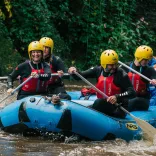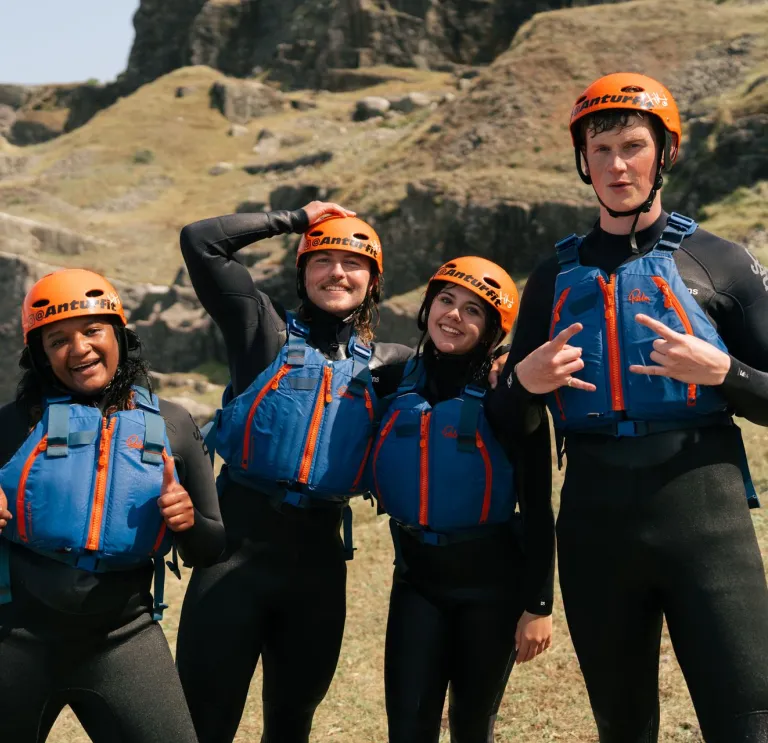
Surfers in Pembrokeshire came up with coasteering as they scrambled around cliffs in the early 1980s. It's come a long way since then, and today, coasteering is an adventure for families as much as adrenaline-junkies.
Before you try coasteering yourself, read our guide about how to go coasteering safely.
What is coasteering?
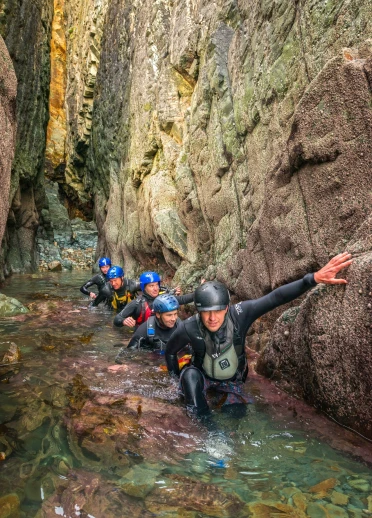
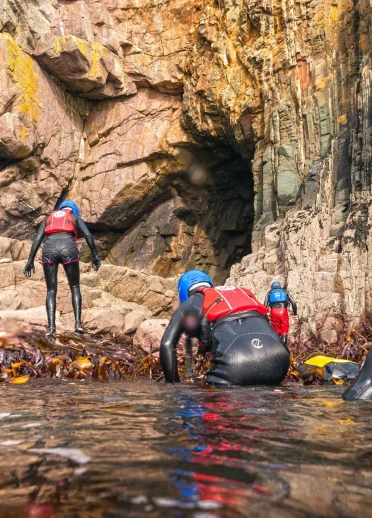
Coasteering is an all‑in‑one coastal adventure, treating the foreshore as nature’s obstacle course. Over a typical two‑to‑three‑hour session, you’ll scramble over rocks, swim into canyons, explore caves, bodysurf breakers, peer into rockpools, learn about the landscape and maybe take an optional leap or two. It’s also about meeting the coastline up close - the wildlife, geology and hidden corners that walkers never reach. With ever-changing conditions, no two trips are the same. One moment you might be drifting through calm water; the next, riding surges or spotting peregrines and curious seals.
Professional coasteering expert and adventure guide Jon Haylock explains:
'Coasteering is an incredible way to immerse yourself into nature and see all the beautiful biodiversity of the marine life; you get to understand how amazingly diverse the coastline is. And you see the splendour of the coast from a completely different angle. You just don’t see all the little caves, all the intricacies of the coast, from paths.'
Is coasteering dangerous?
Coasteering is an extreme adventure activity in an ever-changing marine environment, so yes, coasteering it can be dangerous. Coasteering is especially risky if you go by yourself.
That’s where accredited providers come in. Not only do their guides teach the techniques to go coasteering safely, they'll select the route based on weather, swell, and tides. They'll provide the right safety equipment (wetsuits, buoyancy aids and helmets) and let you know what to wear and bring with you. Guides let you decide your level of challenge to make it fun, with alternatives offered where required. No one’s going to make you jump from heights if you really don't want to! Guides also know to avoid coastlines when seabirds and seals breed.
Jon explains:
'I can understand why coasteering might sound scary to some, but the amazing thing about the Welsh coastline is it’s so indented that professional guides can tailor a coasteering experience to match all levels. You’re in a wetsuit, buoyancy aid and helmet, so you’re warm, comfortable and in experienced and knowledgeable hands, so why not take the plunge?'
Jon Haylock, Adventure GuideCoasteering is about the journey. You’re right down at sea level, in that impact zone where the waves are crashing. What grabs you is the power of the ocean; it’s a mind-blowing experience.”
Best places to go coasteering in Wales
You need dramatic cliffs, hidden coves, rugged shores and decent waves for the best coasteering experience. Which is why Penrhyn Gŵyr (the Gower Peninsula) and Pembrokeshire in West Wales, and Pen Llŷn (Llŷn Peninsula) and Ynys Môn (Anglesey) in North Wales, are Cymru's coasteering hotspots.
Coasteering in Pembrokeshire
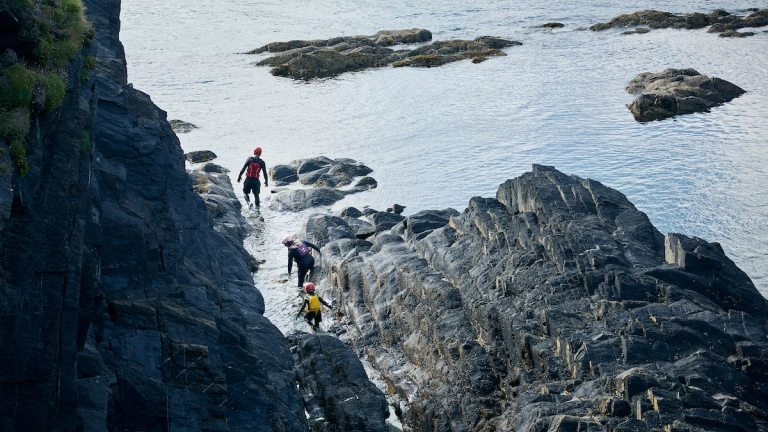
Other places to try coasteering in Wales
You'll find plenty of providers covering Penrhyn Gŵyr in West Wales. The coastal features, including Three Cliffs Bay and Pen Pyrod (Worm's Head) are so unique and beautiful. The Vale of Glamorgan's coast is also popular because of the incredible fossil-filled limestone landscape, and Caerdydd (Cardiff) being nearby.
In North Wales, Pen Llŷn (Llŷn Peninsula) and Ynys Môn (Anglesey) are the go-to spots. High cliffs and dramatic rocky shorelines, coupled with the wild Atlantic sea, make coasteering in this region an experience you'll never forget.
Finding guided coasteering experiences in Wales
Coasteering trips should always be delivered by experienced, qualified providers to keep you safe and ensure you have a fantastic adventure. Check out our page about guided coasteering experiences by region to find an accredited operator near you.
Coasteering adventures for all abilities
Coasteering can be easily tailored to different confidence and experience levels, making it accessible to a wide range of adventurers. Chat to your guides before or during the trip with any concerns, and they'll adapt the route to suit the group. And don’t worry - guides put no pressure on you to jump. Friends and family might though, and you might surprise yourself if you don’t look down.
First‑timers can enjoy low‑level routes with gentle swims, simple scrambles, and optional small jumps. Families with children aged 8 or 10+ can explore fun, manageable sections of coastline designed to build confidence while keeping things safe. Confident swimmers and thrill‑seekers can take on more challenging features, including bigger jumps, stronger swells, and technical climbs - guided every step of the way. It’s also perfect for groups, offering a shared, energising experience that can be as relaxed or as adrenaline‑fuelled as the group wants.
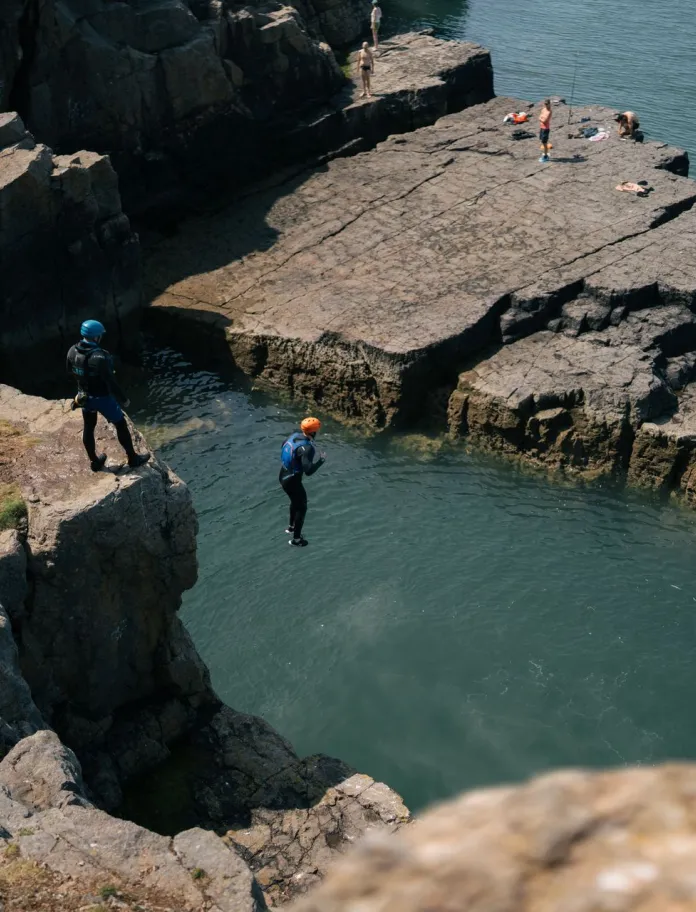
Coasteering holidays and short breaks
If you love adrenaline activity focused holidays, coasteering will be the standout highlight of a wider Welsh adventure break. The year-round appeal means you can enjoy lively summer seas or crisp, energising winter conditions.
Create your own adventure itinerary for short breaks or multi-day trips. Some providers offer multiple activities, including watersports or climbing, for a thrilling day out. Combine coasteering with kayaking or paddleboarding to explore calmer inlets and sheltered bays, or add a dose of surf culture with a surf lesson on one of Wales’ sweeping beaches. It also fits naturally alongside coastal walking and exploring, especially if you're walking the Wales Coast Path or following parts of The Wales Way.
Planning your coasteering experience
Most coasteering sessions take around 2-3 hours. This may include changing time, a safety briefing session and a shower afterwards. Some sessions start from the provider's base, which should have changing facilities, somewhere safe to store your things, and showers. Other providers might expect you to meet them at a specific location, e.g. a car park. The guide might change the advertised locations and routes depending on weather and tide conditions.
Your activity provider will supply you with the essential safety kit, including helmets, wetsuits and buoyancy aids, and confirm what else to bring on the day. The kit you usually need includes; swimwear to go under your wetsuit, a pair of old trainers (not beach shoes) to protect your feet and grip the rocks, and shorts to go over your wetsuit, plus a towel and a change of clothes.
How to go coasteering safely
howCoasteering without an accredited guide can be dangerous. Find details of many accredited coasteering providers who can ensure that your coasteering adventure can be enjoyed safely.
The Welsh coast can be fantastic fun and provides great opportunities for adventurous activities, but read up on the risks and make sure you are prepared.
- Go with an accredited coasteering provider
- Follow these tips from the RNLI for staying safe on the Welsh coast.
- Visit AdventureSmart.uk for further information on how to stay safe whilst exploring Wales.